Franchetti’s Facts: Caving to extreme demands endangers higher education.
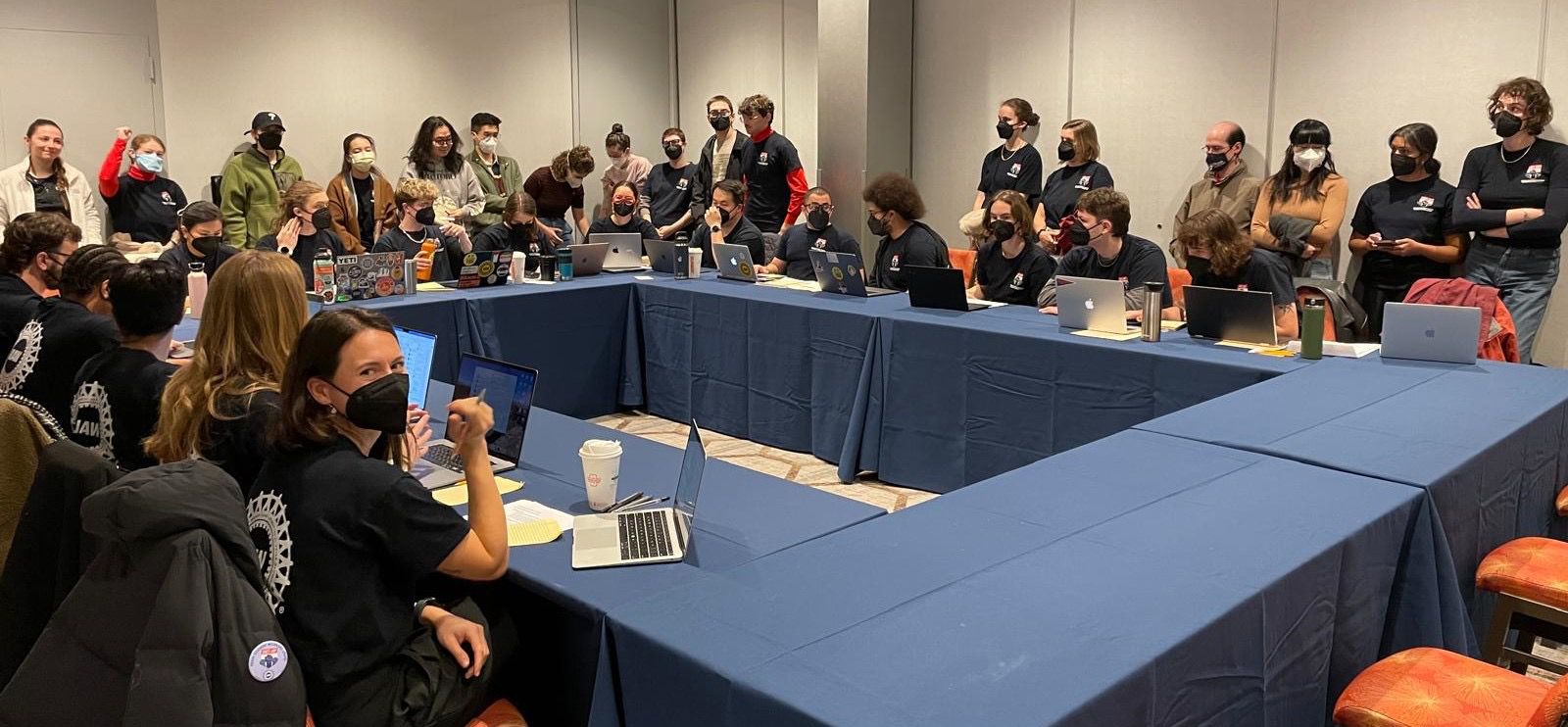
Photo Credit: GET-UP
By: Abraham Franchetti
Last semester, “Graduate Employees Together – University of Pennsylvania” (GET-UP), a UAW affiliate, authorized a strike after more than a year of negotiations, including “42 bargaining sessions and reaching 23 tentative agreements”. The union has set February 17th 2026, as the deadline and, unless they give up some of their demands, it is critical that Penn breaks this strike.
According to recent guidance from the Office of the Vice Provost, Penn has already offered grad students: a 14.5% pay raise from the original stipend, full vision coverage, 80% of the cost of dental coverage in addition to their existing full medical coverage, and a $40,000 fund for F-1 and J-1 students who lose their visas. As part of these negotiations, Penn has even offered grad students paid vacation time. This package exists on top of the already exceedingly generous benefits granted to masters and PhD students, including access to extensive university resources, getting paid to get a degree, and the privilege of attending the University of Pennsylvania. Instead, GET-UP is demanding concessions that undermine academic integrity, divert critical resources, and steal workers’ pay.
Penn describes Union “overreach on academic issues” as a critical point of disagreement. Traditionally, unions are only involved in matters regarding a graduate student’s paid work such as teaching and research. Instead, GET-UP would like to be involved in disputing course grades, “having a Union representative attend meetings with their supervisor/mentor”, and extending the limit on how long it takes to graduate. Most troubling, the Union has refused to assent to a proposal affirming the University’s right to “administer academic programs and classes, as well as requirements for graduate education”.
In their most recent proposal, GET-UP demands the hourly minimum wage be increased 50%, from $21.50 to $32.50 (more than four times the state minimum wage). Paying graduate students far above market would cause a diversion of resources, tuition hikes for undergraduates, and even program closures. When Boston University’s Graduate Workers Union won a contract raising the minimum stipend to $45,000, the school was forced to pause admissions for a dozen PhD programs. Penn has already offered GET-UP more: a $45,500 minimum stipend with another 2.5% raise the following year. Instead, GET-UP is demanding a $52,250 minimum even after Penn has already cut graduate admissions. Every year, thousands of graduate applicants are rejected from Penn. Not only is above market compensation unnecessary to retain workers, it will cut the number of programs Penn can offer.
In their initial proposal for international immigrant workers, the Union demanded that the if the University is contacted by the Social Security Administration regarding an inaccurate or fraudulent SSN “the University will not require that Graduate Employees listed on the notice bring in their social security card for the University’s review” and agree not to contact SSA or a government agency unless required by law. Most recently, they are demanding the fund for visa-less former employees to be increased to $100,000 and that immigrants who lose their visa as a result of criminal activity be eligible as well.
Most dangerous is the Union’s demand that students who did not consent to be part of the union be forced to pay union dues. GET-UP has set its dues as 1.44% of gross monthly pay, which is more than $750 for each student on their preferred minimum compensation. As a result, graduate students who earn above the minimum stipend could see their compensation fall if Union demands are met. At Cornell, Russel Burgett, a PhD student, has filed federal charges with the National Labor Relations Board due to the local grad union’s insistence on taking his wages. What will this money be used for? If history is any indicator: luxurious amenities and benefits for union leaders.
Caving to GET-UP’s demands would be a mistake in both the short and long term for the University. Ceding academic oversight, huge pay raises, and subsidizing immigrants with criminal records will be hard to walk back from, particularly if the Union is financed by taking the wages of all grad students, not just members. Instead, Penn’s administration must take a principled stance by putting forward a reasonable final proposal and calling GET-UP’s bluff. The best way to do this is to take all preparations necessary to weather the strike, including: hiring adjunct Professors to replace instructors, pausing non-essential research, and creating an incentive program to ensure the few irreplicable researchers or instructors remain at work. Professors from nearby universities would relish the opportunity to teach at Penn, and most graduate students care more about their studies and degrees than political agendas. Temple University dealt with a graduate strike in 2023 simply by telling striking students that, like undergraduates, they would need to pay their tuition. They later agreed to pay grad students a minimum of $24,000 a year, the same amount indicated in an original proposal the union rejected before the strike.
At the same time, Penn should explore legal options to limit the reach of GET-UP. When President Roosevelt signed the Wagner Act in 1935, he never imagined that more than 25% of the United Auto Workers would be pampered graduate students. Ivy League students do not face challenging working conditions or abusive bosses that unions serve to protect workers from. In fact, given that they are pursuing a degree and receive a stipend for teaching as a part of their studies, it is debatable whether they legally qualify as “employees” regulated by the NLRB at all (which the Cornell suit alleges). Additionally, graduate students who stand to lose money from union activity should make their voices heard, and pursue legal activity if necessary.
The infiltration of historically working-class unions by privileged Ivy Leaguer students has contributed to internal chaos, and a failure to represent real workers’ interests. For example, at Columbia, a UAW affiliated graduate student union has campaigned for amnesty for student protestors who assaulted janitors represented by the Transport Workers Union. The president of the UAW affiliate was expelled for his role in seizing and damaging Hamilton Hall. Unite All Workers for Democracy (UAWD), the UAW faction that helped elect activist president Shawn Fain recently dissolved due to the conflicts between auto workers and college students. In a letter advocating dissolving the group, the UAWD leadership team wrote “It is clear to us that the coalition of members that came together to achieve the UAWD’s greatest successes can no longer work together toward common goals.” The board wrote one of the aspects that made the caucus “unsustainable and hindering our growth” was that 56% of UAWD members were employed in higher education and legal services, with 38% residing in region 9A, which is limited to Eastern New York and New England. As a result, direction became fractured, with professional class members overturning Steering Committee decisions during 2.5 hour long online sessions. Strengthening Penn grad students within the ranks of UAW only serves to dilute autoworkers from charting their future.
The interests of grad students and autoworkers are fundamentally opposed on several social issues, and more importantly their incentives are vastly different. While autoworkers may stay with the same company for decades, grad students union membership only lasts a few years. This means that student activists may push for major political statements without considering their long term implications. In 2023, Shawn Fain and UAWD led the “Stand Up Strike” which won raises of 25% and several other benefits. Since then, Stellantis, General Motors, and Ford have laid off or cut more than 3,000 jobs. While Shawn Fain and UAWD may argue that the increased benefits were worth the predictable decrease in production, those former UAW members would not. Penn should not allow its graduate programs to become the next testing ground for strategies that have already destabilized industries and harmed real workers elsewhere.
To preserve the well-being of the university community and real union laborers, the Penn Administration must make a stand against GET-UP. Resisting extreme demands here will ensure that there are fewer copycat attempts in the future and on other campuses. If GET-UP follows through on their decision to strike, Penn should take serious action to end the strike quickly and ensure normal campus activity. In either case, the short term costs of disruption are worth avoiding the long term consequences of acquiescing to GET-UP.
Abraham Franchetti is a senior in Wharton studying Finance with a minor in Classical Studies from Port Washington, NY. Abraham is President Emeritus of the Wharton Management Club and the Business Director for The Pennsylvania Post. His email is abrahamfranchetti@gmail.com