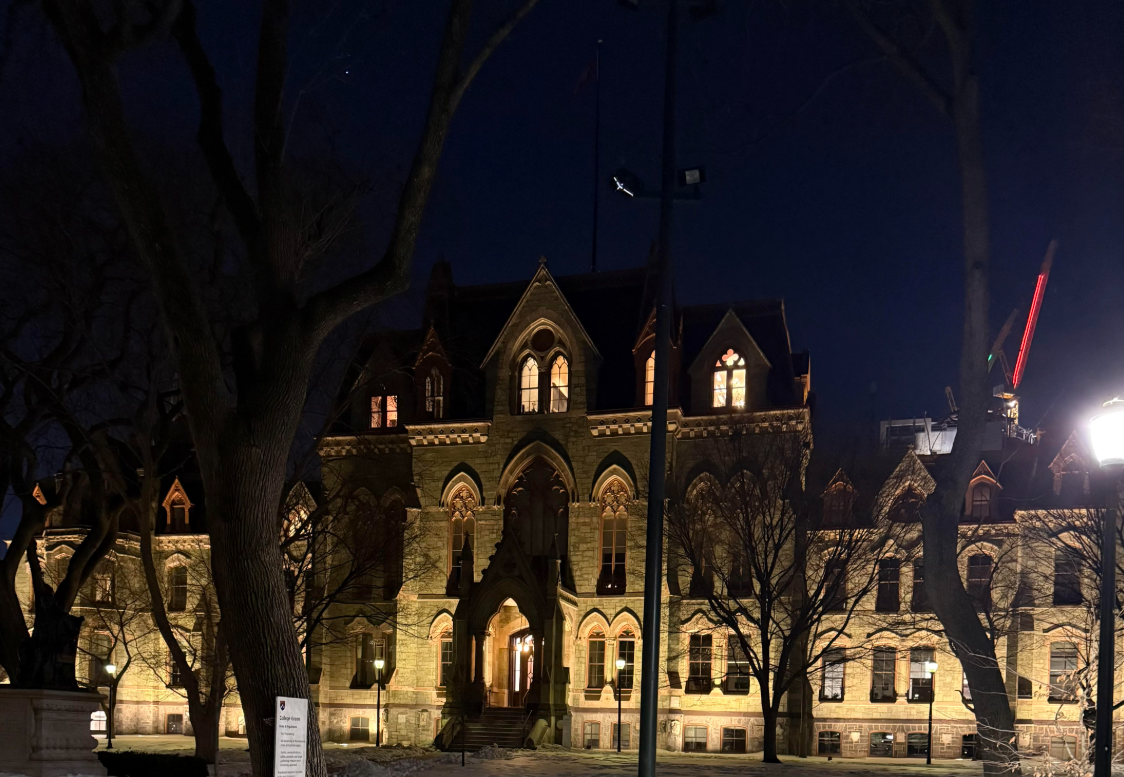
Photo Credit: Nicolas Scola
By: Malia Sanghvi
Abstract: Columnist Malia Sanghvi argues that Penn students should spend less time optimizing their schedules and more time saying yes to plans.
The end of the school year is a few days away.
For many seniors, including myself, this moment prompts reflection: Have we made the most of our time at Penn? And more importantly, what does making the most of one’s time even mean?
At a university that emphasizes optimization, ‘making the most’ looks a lot like doing the minimum to sustain the maximum number of classes and extracurriculars possible. However, I’m starting to wonder if we optimized the wrong things?
Particularly at Penn, there’s a certain glory in the grind. We have built a culture where being busy is a form of social currency within itself. The excuse, “Sorry, I have work,” is never questioned, and usually admired. As the saying goes, it’s always midterm season.
Especially during freshman and sophomore year, it felt like a never-ending balancing act of managing class work, extracurriculars, and preparing for recruiting. I could walk down the hallways of Huntsman at 10pm, only to find the most isolating social hour. There were acquaintances in every GSR, but everyone was studying away. Interactions were limited to the quick vending machine run or bathroom break.
Yet, when I think about my best moments, they came during junior and senior year, when I began to embrace more spontaneous plans. Whether it was weekend trips away, brunches with friends before 10:15s, or even catching a brief White Dog happy hour between classes, my everyday became far more enjoyable, and I found I did not actually sacrifice academic performance.
There is a reason for this. High quality social relationships have been linked with longer, happier, and healthier lives for millennia. Cultivating those relationships and spending time with others has been shown to reduce cognitive and emotional strain, something called social baseline theory. By spending more time socializing, it makes life seem more manageable.
Additionally, I often feel more productive the day after going out. Even though I technically lost time, I have found I am mostly able to make up the work by being more productive per hour. The science supports this productivity increase. Cornell Health recommends taking study breaks that are not social media and instead involve either physical activity or social communication, which are both key elements of any outing.
Of course, this article is not a suggestion to entirely neglect your academic work in favor of a night out. However, I challenge you to think of the tradeoff differently. A core concept in economics is opportunity cost, which means that every decision comes at the expense of the next best alternative. While it’s easy to say that going out comes at the expense of a few hours of studying and a little more sleep, we rarely frame it the other way around. The answer is we lose out on the conversation that won’t be had, the friendship that doesn’t deepen, and the memories. While these are intangible benefits, they still hold significant value, especially as they accrue across many events over the course of four years.
Psychologists have also found that we do not remember experiences in full and instead retain the peaks and the ending, something known as the peak-end rule. This means that the moments that define our time at Penn will not be the hours spent in Van Pelt. What we will remember are the nights we almost stayed in, plans we almost declined, and the people we chose to spend time with.
There is a version of success that includes showing up for your own life while you are still living it. After graduation, the stakes only get higher while hours get longer and the responsibilities multiply. If we can’t justify a happy hour now, when are we planning to?
Malia Sanghvi is a senior studying Finance and Management from Fort Wayne, Indiana. Her email is malia1@wharton.upenn.edu