Photo Credit: Nicolas Scola
By: Jennifer Mesa
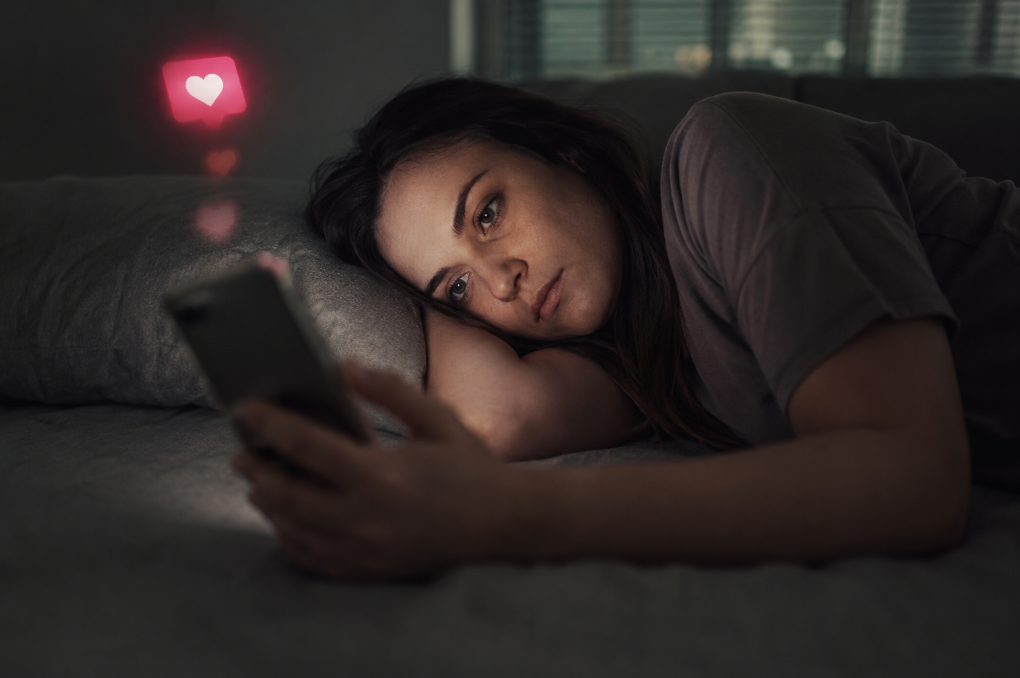
Dating apps promised to make it easier to find love. While they have certainly made it effortless to find people, they have not made it easier to talk to them like they are real.
In a culture where everything from groceries to therapy can be ordered on a screen, it’s not surprising that romance has been folded into the same logic of efficiency and optimization. Profiles compress a thousand possible introductions into a few photos and prompts; a swipe replaces the awkwardness of approaching someone in person. For people who work long hours, live in small social circles or don’t want to date at school or the office, apps can expand the pool of potential partners and clarify intentions up front. But the very features that make dating apps efficient tools for locating “matches” also make it harder to communicate in the ways that actual relationships demand: through imperfection, risk, and sustained attention to another person.
When you open a chat box, and realize your text will become the first impression you make, communication can quickly become performance. You don’t just send a thought; you craft a first line that’s not too cheesy and not too dull, weigh whether one exclamation point seems cold and two seem unhinged, delete and rewrite, and run your message past a friend. On the other hand, your “match” does the same. What looks like a simple exchange between two people is often the product of a small committee and several rounds of revision. The connection taking shape is not between two human beings but two scripts.
The curation doesn’t stop at text. Profiles are built from self‑reported traits and carefully selected pictures. A single photo can be read as a promise you never made. A friend of mine put a mirror selfie on her profile in a dress that showed her figure. On a first date, when she made it clear she wasn’t looking for anything physical, her date said he was “surprised” because he thought her picture signaled sexual availability. The app had turned a snapshot of her body into a promise you never made she had never agreed to.
Of course, people also manage impressions in face‑to‑face conversation. But in person, there are built‑in constraints: you can’t rewind an awkward joke, edit out a blush, or Facetune your face mid‑sentence. You stumble, misread cues, say something dumb, and recover. Those small imperfections are not glitches in communication; they’re how we become legible to each other. They reveal a sense of humor, insecurities, a particular way of reacting when things don’t go as planned. When an app environment rewards endless editing and punishes spontaneity, it trains people to present personas and to respond to other people’s personas in turn. By the time two people meet, disappointment is almost baked in: the person you’ve been talking to never really existed.
In addition to flattening people, the structure of apps flattens commitment. Adults under 30 are the group most likely to use dating apps, and a large share say they are hoping to meet a long‑term partner. But the way the apps work makes that harder, not easier. The swipe interface, with its endless stream of faces that appears as long as you move your thumb, encourages a constant awareness of alternatives. Why invest serious time in one person when there is always the possibility of someone marginally more attractive, more interesting, more “compatible” one swipe away?
That mindset seeps into how users treat each other. Writers who have documented their time using Tinder describe learning to treat matches as disposable: there is always another notification, another match, another distraction waiting on the app. One minor “ick” or awkward silence becomes a reason to reopen the feed instead of a chance to see who the other person is beyond first impressions. It’s not just that people get hurt; over time, they adjust their expectations downward. You go on dates assuming you are interchangeable, that the person across from you is already half‑scrolling through replacements in their head.
There are a few (limited) communicative up-sides in using dating-apps. For people looking only for casual sex, the reputations of different platforms do some clarifying work. When two people both choose Tinder for a late‑night swipe, there is a shared understanding that what they are signing up for is likely short‑term and physical. Apps like Hinge, with prompts about religion, politics and relationship goals, give users more tools to state what they want from the beginning. That doesn’t eliminate miscommunication, but it can reduce some of the painful situations where one person secretly wants a relationship and the other is only looking for a fling.
The deeper problem is what people learn to expect from romance when dating apps become the default way to meet. Communication in this world is constant but thin. Instead of learning how to sit with awkwardness, disclose unflattering truths or stay when things are boring or difficult, users are nudged toward keeping options open and feelings provisional. Even hookups, which have always existed, become easier to arrange with almost no social or emotional investment. Sex, like everything else, is something you can “Amazon Prime”: ordered quickly, delivered efficiently, requiring little of you beyond the right combination of swipes and messages.
From my perspective, this is not just a technological shift but a moral one. When the dominant lessons of our dating infrastructure are that other people are replaceable, that vulnerability is a liability and that the safest move is always to keep one foot out the door, we shouldn’t be surprised when trust erodes and loneliness spikes. Apps did not invent selfishness or cowardice, but they give both a frictionless interface.
The question is not whether people should delete every dating app and return to meeting exclusively through church picnics and mutual friends. For many, apps really do open doors that would otherwise stay closed. The more pressing question is what kinds of communicative habits we are rewarding. Do our tools make it easier to see another person clearly and to act as if their time, body and emotions matter? Or do they normalize a way of relating in which other people are just interchangeable items in an endless feed?
If the answer is the latter, then the problem with dating apps isn’t that they have failed to “fix” modern romance. It’s that they are teaching us to want less from each other, and to expect less of ourselves, than real love or even just dating requires.
Jennifer Mesa is a Senior in the College studying Political Science and History from Miami, FL. Jennifer is also the Editor in Chief (Emeritus) for The Pennsylvania Post. Her email is jenmesa@sas.upenn.edu